
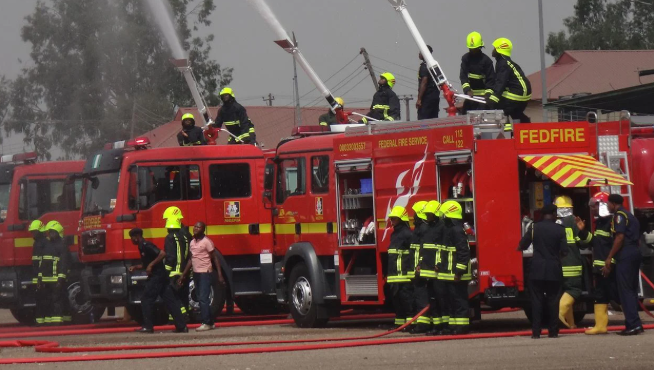
- High incident volume: The Lagos State Fire and Rescue Service handled 1,324 emergencies between January and September 2026, with fire calls making up the vast majority.
- Severe human and financial toll: The incidents resulted in 65 fatalities and N13.24 billion in property damage, though firefighters successfully rescued 210 people and saved N79.44 billion worth of assets.
- Dry season safety warning: Authorities urged residents to improve fire safety by avoiding electrical overloads and improper waste burning ahead of the dry season, while condemning 341 false calls that hindered response times.
The Lagos State Fire and Rescue Service has urged residents to strengthen safety measures as the dry season approaches. This warning follows the recording of 1,324 emergency incidents between January and September 2026.
Maria Fadairo, senior public affairs officer of the agency, stated that fire calls dominated the statistics, accounting for 1,135 of the total cases. The service also responded to 79 rescue calls, 100 salvage operations, nine collapsed-building incidents, and a gas-related explosion.
Casualties and Property Losses
During the nine-month period, emergency teams rescued 210 victims alive. However, they recovered 65 suspected fatalities from various incident scenes across the state.
Property worth an estimated N79.44 billion was saved by firefighters. Conversely, total losses from these emergencies are estimated at N13.24 billion.
Monthly Breakdown and False Alarms
January recorded the highest incident volume at 203 cases, closely followed by March with 201. September recorded the lowest activity with 94 incidents.
The agency also logged 341 false emergency calls. Officials warned that fake alerts severely delay response times and endanger lives.
What factors drove the high number of fire emergencies in Lagos?
The high volume of fire emergencies was driven by electrical overloads, indiscriminate burning, and improper handling of flammable materials. Margaret Adeseye urged residents to switch off unused appliances and maintain functional fire extinguishers to curb risks during the dry season.
Controller-General Margaret Adeseye advised residents to clear escape routes and cooperate with emergency responders. The agency’s activity report concluded its review of operations for the period ending September 30, 2026.