
WASHINGTON — President Donald Trump signed a formal trade proclamation on Thursday, August 13, 2026, imposing tariffs ranging from 10% to 100% on imported unmanned aerial systems and their critical components. Released by the White House, the executive action targets foreign-supplied drone technology to mitigate perceived national security vulnerabilities and reduce deep domestic reliance on overseas manufacturing hubs. The sweeping measures establish tiered duty rates based on drone weight class, tactical capabilities, and country of origin, reshaping commercial trade frameworks for the rapidly expanding robotics sector.
Under the new rules, a 100% ad valorem tariff applies immediately to heavier commercial and industrial drones weighing more than 25 kilograms, alongside models equipped with thermal imaging capabilities and specialized automated docking stations. Smaller consumer-grade drones and general replacement parts face a 25% levy. Meanwhile, imports originating from allied nations including the European Union, Japan, South Korea, Switzerland, Liechtenstein, and Taiwan are subject to a 15% rate, whereas qualifying shipments from the United Kingdom face a reduced 10% tariff conditional upon strict domestic sourcing rules.
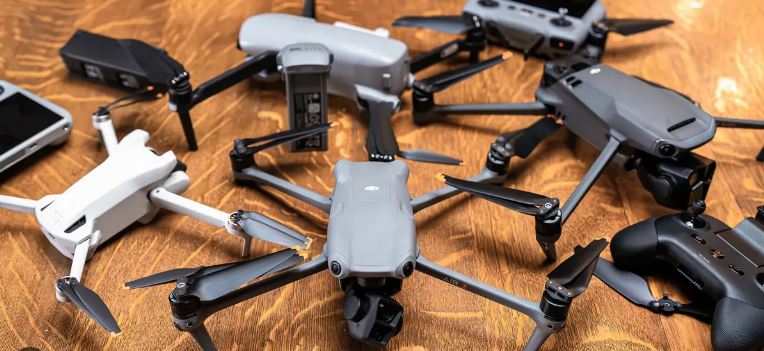
The strategic move follows months of escalating trade friction and comes on the heels of previous Federal Communications Commission restrictions targeting foreign-made communications hardware. Commerce Secretary Howard Lutnick is authorized under the proclamation to launch a comprehensive onshoring initiative aimed at boosting domestic manufacturing capacity. Industry analysts note that the policy will force U.S. commercial buyers and public safety agencies to pivot rapidly toward domestic or allied suppliers despite potential short-term cost increases.
Why did the administration target foreign drone supply chains with severe tariffs?
Federal officials stated that overseas dependency on foreign unmanned aircraft creates severe cybersecurity vulnerabilities, risks unauthorized data exfiltration, and threatens critical domestic infrastructure. The ongoing conflicts in Ukraine have also demonstrated that commercial drones can easily serve dual-use military functions, underscoring the urgent need to secure sovereign manufacturing supply lines.
The primary tariffs on high-sensitivity drones and components are scheduled to take effect 21 days after signing on September 3, 2026, while less sensitive components are granted an extended 180-day transition window.