
- Shared parentage, separate identities: Both TECNO and Infinix operate under Transsion Holdings, sharing manufacturing and supply chains while aggressively targeting different emerging market demographics.
- Diverging product philosophies: TECNO focuses on premium experimentation, camera innovation, and business utility via HiOS, whereas Infinix prioritizes raw performance, rapid charging, and gaming features through XOS.
- Strategic market dominance: By deploying distinct pricing structures and consumer positioning, the sister brands collectively crowd out competitors like Samsung and Xiaomi across Africa and Southeast Asia.
TECNO and Infinix operate under the same parent company, Transsion Holdings. Despite sharing supply chains, research facilities, and after-sales networks through Carlcare, these two brands maintain distinct identities. They compete aggressively across emerging markets by targeting different consumer segments.
Transsion strategically positioned both brands to capture varying demographics in regions like West Africa. While they share manufacturing foundations, their product engineering and software philosophies diverge significantly.
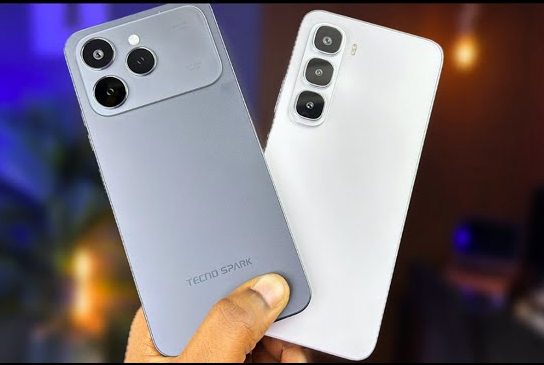
Design Philosophy and Hardware Focus
TECNO acts as the group's vehicle for premium experimentation and camera innovation. It introduced foldables like the Phantom V Fold and engineered proprietary sensor technologies tailored for diverse skin tones. Its Camon and Phantom series push into upper-mid-range price brackets.
In contrast, Infinix prioritizes raw performance, high refresh rate displays, and rapid charging technologies. It targets mobile gamers and younger demographics who demand maximum specifications at competitive price points. Its Note and Zero series frequently undercut rival devices.
Market Share and Regional Distribution
Transsion holds a combined global market share of roughly eight to nine percent. TECNO historically anchors the parent company across African markets. In Nigeria, TECNO maintains a dominant market share ranging between seventeen and twenty-five percent.
Infinix captures a slightly smaller share across major African hubs but boasts strong popularity among internet-first users. It also records rapid expansion in Southeast Asian markets like the Philippines. Both brands collectively crowd out competitors like Samsung and Xiaomi in budget categories.
Software Ecosystems and Pricing Strategies
Software customization separates the two brands at the user interface level. TECNO utilizes HiOS, focusing on stability and business utility. Infinix employs XOS, emphasizing high customization, gaming enhancements, and feature-rich menus.
Pricing structures reflect their target personas. TECNO covers a broader spectrum, from entry-level Spark devices to premium foldables. Infinix concentrates heavily on value-driven pricing across its Smart, Hot, and Note lineups.
Why do sister brands TECNO and Infinix compete against each other?
TECNO and Infinix compete to execute a market segmentation strategy. By targeting different buyer personas—professionals versus mobile gamers—parent company Transsion captures a larger total market share, effectively neutralizing competitors across emerging regions.
Transsion established TECNO in 2006 before launching Infinix in 2013.