
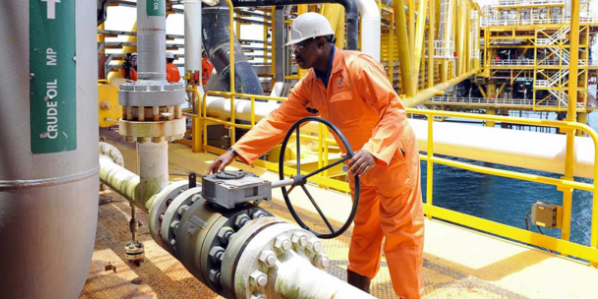
- Production milestone: Nigeria’s crude oil and condensate output reached 1.82 million barrels per day, backed by 73 active drilling rigs.
- Key growth drivers: The surge resulted from enhanced security surveillance in the Niger Delta, accelerated well-workover programs, and faster regulatory approvals.
- Economic impact: The production growth strengthens national fiscal buffers, foreign exchange reserves, and sovereign credit ratings.
Abuja — Nigeria's crude oil and condensate production surged to one million, eight hundred and twenty thousand barrels per day, supported by more than seventy-three active drilling rigs nationwide. Upstream regulatory authorities and petroleum ministry executives released the production update during an energy sector briefing in the capital.
Commission directors attributed the output increase to enhanced security surveillance across oil-producing delta corridors and accelerated well-workover programs executed by operating companies. Energy analysts noted that sustained production growth is essential for boosting foreign exchange reserves and stabilizing macroeconomic indices across West Africa.
Upstream Rig Deployment and Drilling Efficiency
Petroleum engineers reviewed active rig deployment metrics, noting that seventy-three drilling units are currently operational across onshore and offshore oil blocks. Technical auditors emphasized that improved maintenance schedules and faster regulatory approvals have reduced non-productive rig time.
Service contractors deployed advanced directional drilling technologies to optimize recovery rates from mature producing fields.
Export Terminal Logistics and Revenue Generation
Export terminal operators tracked steady lifting schedules and enhanced crude grading protocols at major coastal loading facilities in the Niger Delta. Financial experts evaluated how increased export volumes strengthen national fiscal buffers and sovereign credit ratings.
Chambers of commerce welcomed the production milestone as a vital boost for domestic industrial development and foreign investment confidence.
Regulatory Compliance and Monthly Production Audits
Upstream petroleum regulatory commission inspectors completed monthly volume reconciliations and equity oil accounting audits. Secretariat staff processed final statutory production returns.
All official monthly production reconciliation reports and royalty remittance filings must be submitted to the treasury by October 31, 2026.
What drove the recent surge in Nigeria's crude oil production?
The recent surge in Nigeria's crude oil and condensate production to one million, eight hundred and twenty thousand barrels per day was driven by enhanced security surveillance in oil-producing regions, streamlined regulatory approvals, and the deployment of over seventy-three active drilling rigs across domestic fields.
The production figures were published on October 9, 2026.