
Accra, Ghana — August 30, 2026 — The Ministry of Tourism, Culture and Creative Arts alongside South Korean delegates officially inaugurated the five-year Ghana-Korea Heritage Project on August 28, 2026. The initiative commits $4.5 million to tackle severe coastal erosion and climate-induced deterioration threatening Ghana's historic UNESCO World Heritage forts and castles.
Speaking at the launch event in Accra, sector leaders underscored that centuries-old architectural landmarks face unprecedented structural threats from rising sea levels and intense Atlantic storm surges. Participating officials confirmed that the bilateral framework will deploy advanced scientific monitoring systems and drone-assisted aerial damage assessments across vulnerable coastal corridors.
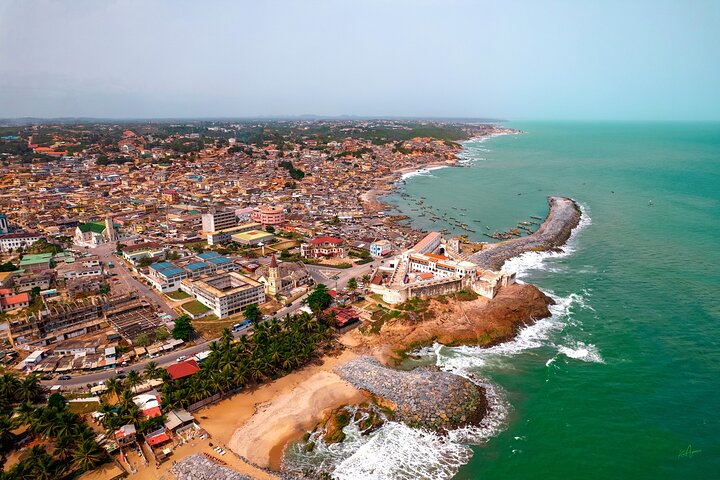
Greater Accra Regional Focus and Site Selections
The initial phase of the intervention targets six critical heritage monuments situated along the Greater Accra coastline. These priority locations include Christiansborg Castle in Osu, Ussher Fort and James Fort in Jamestown, Fort Augustaborg in Teshie, Fort Vernon in Prampram, and Fort Fredensborg at Old Ningo.
Engineering assessments indicate that local sea levels rise at approximately 3.89 millimetres annually, while local shorelines recede by two to three metres each year. Without aggressive preventative engineering, salt-induced masonry decay and foundation scouring threaten to erase foundational chapters of transatlantic history.
Capacity Building and Technical Training Schedules
Human resource development forms a core pillar of the bilateral agreement between Accra and Seoul. An initial cohort of six specialized local heritage experts completed an intensive two-week policy training program in South Korea.
Project coordinators announced that a subsequent group of six designated site managers will travel to South Korea for a two-month specialized site management training residency scheduled between October and November 2026. These trained professionals will spearhead the drafting of a national heritage climate-response policy by 2030.
Socio-Economic Impacts on Coastal Tourism
Beyond architectural preservation, the project integrates local fishing communities whose livelihoods intersect directly with cultural tourism. Regional hospitality operators and micro-entrepreneurs depend heavily on steady tourist traffic visiting coastal heritage landmarks.
Stakeholders emphasized that protecting these physical assets safeguards regional cultural diplomacy and educational resources for future generations. Community engagement frameworks will roll out across all target municipal districts starting September 10, 2026.
What drove the launch of the Ghana-Korea Heritage Project for coastal castles?
The Ghana-Korea Heritage Project was driven by mounting environmental pressures, including severe coastal erosion, rising sea levels, and structural deterioration threatening historic forts and castles along Ghana's coastline, prompting a $4.5 million bilateral rescue intervention.
The comprehensive technical training phase for designated site managers is scheduled to commence in October 2026.