
BRUSSELS, Belgium — The European Commission mobilized emergency civil protection assistance on Monday, August 17, 2026, deploying multi-national firefighting fleets and ground personnel to combat severe wildfires sweeping through Belgium and Spain. The activation of the EU Civil Protection Mechanism follows weeks of persistent high temperatures and tinder-dry conditions that have severely stretched regional response capabilities across the continent.
In Belgium, local authorities confronted the largest modern-day wildfire in the country's history, which erupted in the sensitive High Fens (Hautes Fagnes) nature reserve near the German border. The blaze has scorched upwards of 3,000 hectares of forested terrain. In response to an official request for international backing, the European Union dispatched two rescEU firefighting airplanes sourced from Sweden, alongside two firefighting helicopters each from the Netherlands, Norway, and Germany.
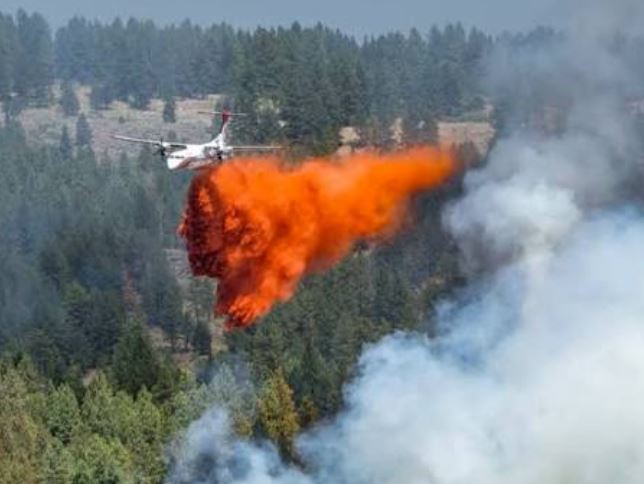
Intensified Operations Across the Iberian Peninsula
Simultaneously, emergency services in northeastern Spain scaled up containment efforts as a major wildfire in the Aragon region breached nearly 16,000 hectares. France answered the regional crisis by dispatching 104 ground firefighters equipped with 36 dedicated support vehicles to reinforce Spanish crews on the front lines.
European Commissioner for Preparedness and Crisis Management Hadja Lahbib emphasized the urgency of cross-border solidarity during the deployment. The Copernicus Emergency Management Service was also activated to provide high-resolution satellite mapping to local commanders, assisting tactical coordination across high-risk zones in Greece, Germany, Montenegro, Albania, France, and Italy.
Wider Continental Vulnerability and Statistics
Statistical data issued by the European Commission indicates that the 2026 wildfire season has tracked at roughly 2.5 times historical average burn rates by the conclusion of July. Prolonged summer droughts have left forest canopies and peat soils exceptionally vulnerable to ignition, prompting civil protection hubs to maintain heightened operational readiness.
Member states continue to coordinate resource sharing via the Emergency Response Coordination Centre in Brussels to mitigate further ecological damage as late-summer weather patterns persist.
Why did the European Union activate the civil protection mechanism for Belgium and Spain?
The European Union activated the civil protection mechanism because national emergency resources in Belgium and Spain became critically overwhelmed by massive, fast-moving wildfires that consumed thousands of hectares of land, requiring immediate international deployment of specialized rescEU aircraft, helicopters, and foreign ground personnel.
National emergency response agencies and the European Commission's Emergency Response Coordination Centre are scheduled to convene an operational review meeting on August 21, 2026, to assess ongoing deployment logistics.